
HCDI Lead Indexer
Chapter 9. Weak evidence and incomplete coverage
Source note
Source basis - S3, physical PDF page 9.
HCDI platform rule (Units 2.6 and 3.9) and general professional knowledge. When evidence is thin, the Lead has two honest options: obtain more evidence, or leave the indicator not evidenced. A not-evidenced indicator leaves every denominator and is disclosed, and it is never a low score. Its corrective action is written by the engagement in English and approved by the Internal Reviewer. The Committee's basis for supervised practice names "a coverage shortfall" as something a Lead must meet. How coverage qualifies a score is Methodology Protected (Unit 3.16). At this level, know that coverage is printed beside the score, and that a shortfall is told to the client plainly, not hidden. Common Error. Quietly arranging for thin evidence to be re-tagged as stronger. That is the failure the controls exist to prevent.
Incomplete coverage needs explicit limits
Basis - general professional knowledge and editorial explanation. External references are identified explicitly; this section adds no HCDI rule.
The pressure to present a complete result can encourage overstatement of weak evidence. Obtaining more evidence and retaining a disclosed gap are distinct honest responses. Missing evidence is not adverse performance. How protected coverage mechanics qualify results is excluded, with no reconstructed thresholds.
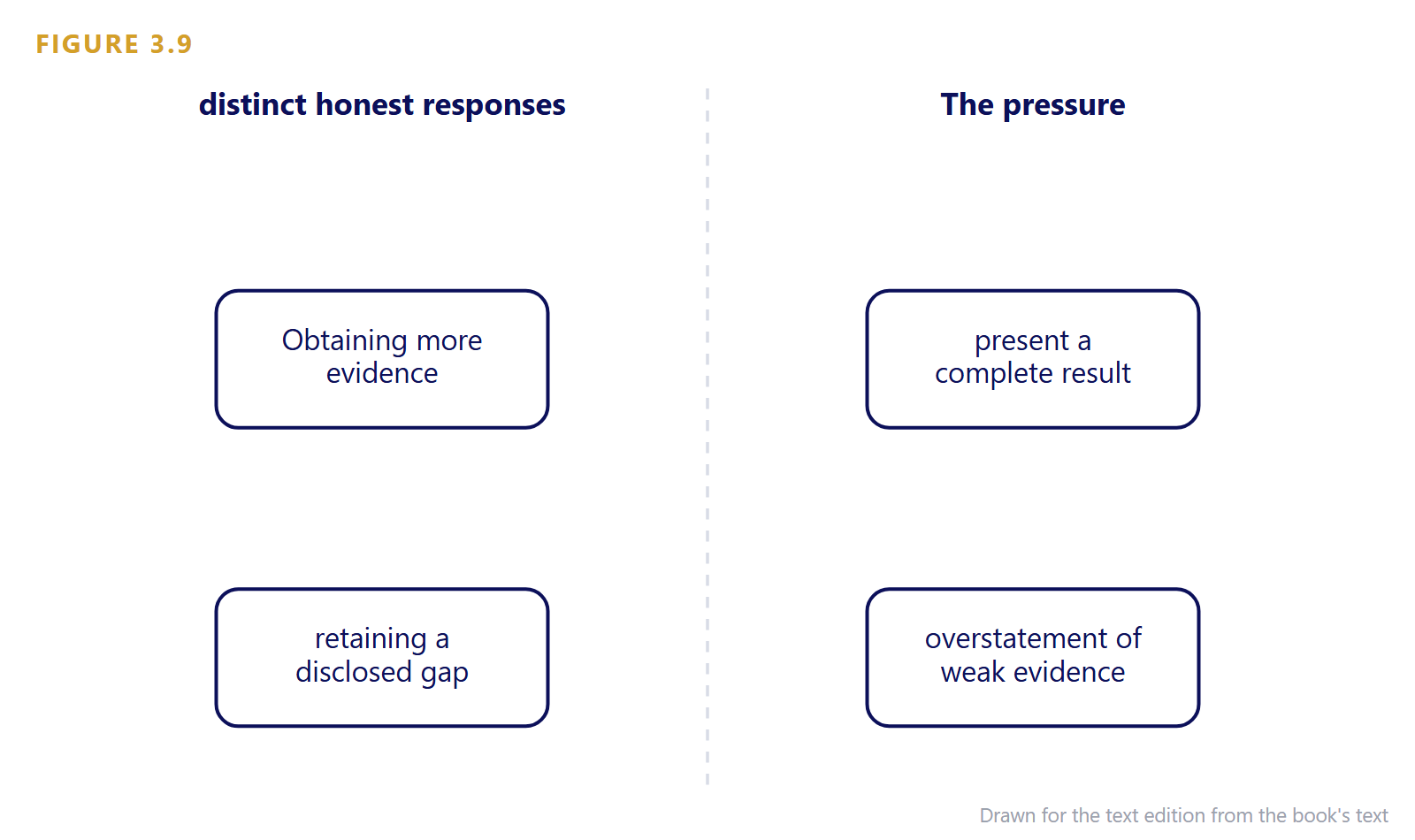
Figure 3.9 Incomplete coverage needs explicit limits. Original conceptual illustration; arrows organise the discussion and do not establish a validated causal effect or a scoring procedure.
Original exercise L3 E09
Basis - original fictional exercise. The organisation, events and any numbers are invented for learning. No HCDI result is assigned.
A client asks the Lead to relabel thin evidence so the cover looks more complete.
| Analytical task | Learner response required |
| Observation | Identify what the stated record directly establishes. |
| Inference | State the interpretation that still needs support. |
| Alternative | Identify a plausible alternative or missing context. |
| Authority | Identify the relevant credential or role boundary. |
Question - Why is that unacceptable?
Worked answer: Part G, exercise L3 E09.