
HCDI Lead Indexer
Chapter 3. Scoping and materiality
Source note
Source basis - S3, physical PDF page 7.
HCDI platform rule (Unit 3.3); general professional knowledge. Materiality is the point at which something matters enough to a decision to be worth stating. On an HCDI engagement the criteria are the decision informed, the declared exposures and the quantitative trigger. They are recorded as agreed with the client, before looking at the evidence. Never invent a trigger nobody agreed. A second member countersigns, and the criteria are fixed after the first score. The order is the protection. Criteria set before the evidence cannot be shaped by it. Criteria set afterwards can be, and a reader has no way to tell.
Red Flag. A request to "adjust the materiality trigger" after the first score. The criteria are fixed.
Prospective criteria protect interpretation
Basis - general professional knowledge and editorial explanation. External references are identified explicitly; this section adds no HCDI rule.
Criteria chosen after results are known can be tailored to the desired conclusion. Agreement before examining evidence constrains this flexibility. A recorded quantitative trigger has no validity merely because it looks precise; it must be the agreed trigger. General materiality reasoning supplies no protected HCDI threshold.
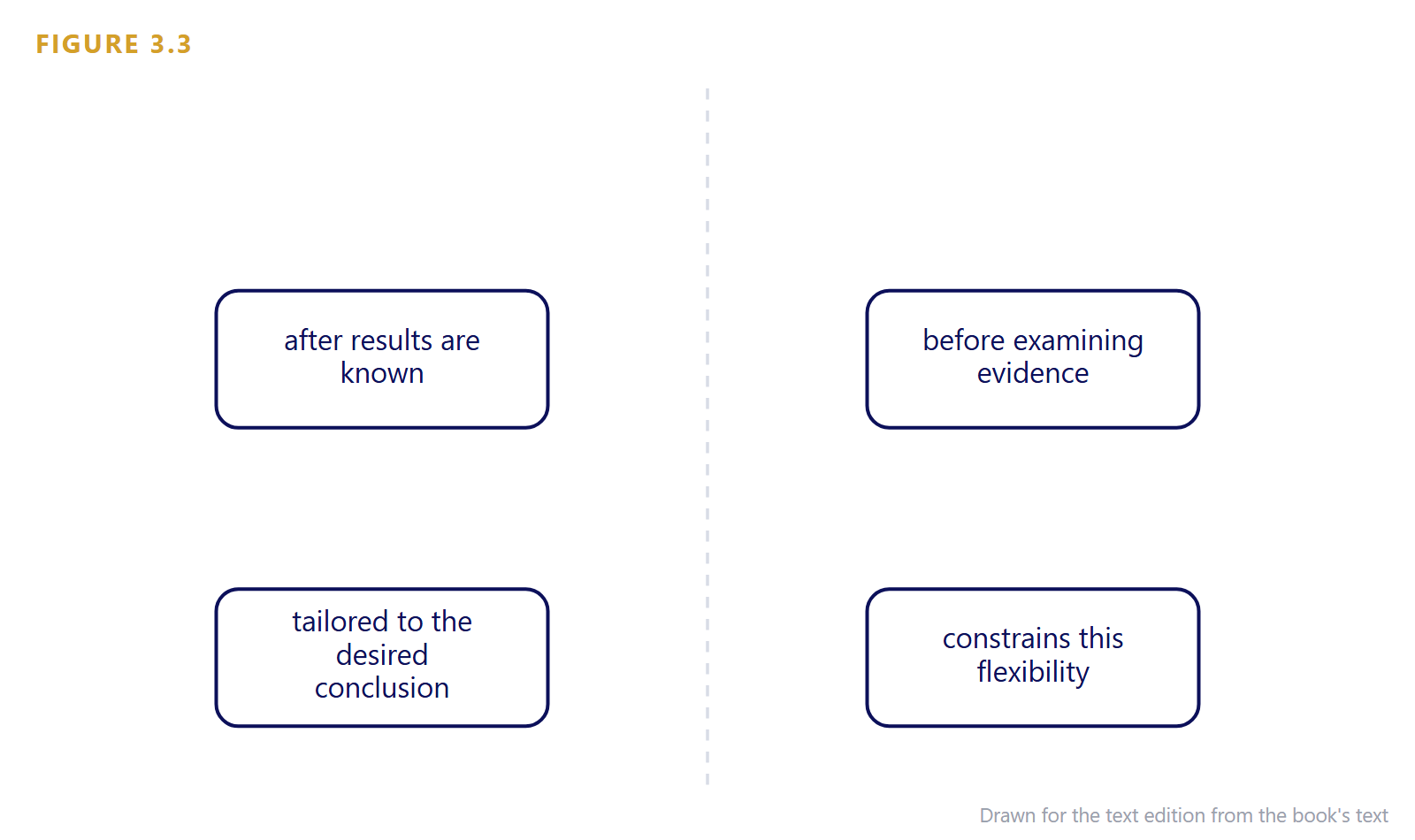
Figure 3.3 Prospective criteria protect interpretation. Original conceptual illustration; arrows organise the discussion and do not establish a validated causal effect or a scoring procedure.
Original exercise L3 E03
Basis - original fictional exercise. The organisation, events and any numbers are invented for learning. No HCDI result is assigned.
A client asks to revise an agreed materiality trigger after the first score makes a finding uncomfortable.
| Analytical task | Learner response required |
| Observation | Identify what the stated record directly establishes. |
| Inference | State the interpretation that still needs support. |
| Alternative | Identify a plausible alternative or missing context. |
| Authority | Identify the relevant credential or role boundary. |
Question - What should be preserved?
Worked answer: Part G, exercise L3 E03.