
HCDI Lead Indexer
Chapter 7. Quality assurance of Indexers' evidence
Source note
Source basis - S3, physical PDF page 8.
HCDI platform rule (Unit 3.7); general professional knowledge. Quality assurance means checking work against a written standard, and doing it before the work goes forward. The Lead's checklist, drawn from the platform's own rules, has nine points: each document linked to the indicator it evidences, the date it speaks from set, a factual description with no note to colleagues, every item tagged, every item attributed to a party on a two-party engagement, every data request provided or missing, roster checks recorded "found" only where the entry is in the document, inquiry sessions opened under consent, and a recorded decision for every instruction-shaped text flag. A correction is made openly. A wrong link means a fresh upload, and the original is not deleted.
Indexer Perspective. The Lead is checking your work against the same rules you were taught. A returned item is a correction, not a criticism.
Quality review checks observable work
Basis - general professional knowledge and editorial explanation. External references are identified explicitly; this section adds no HCDI rule.
A useful review checks against an explicit standard while preserving who corrected what. Silent repairs hide the original problem and deny feedback. The public source checklist is retained; personal extensions are labelled study aids. Quality assurance does not turn the Lead into HCDI's Internal Reviewer.
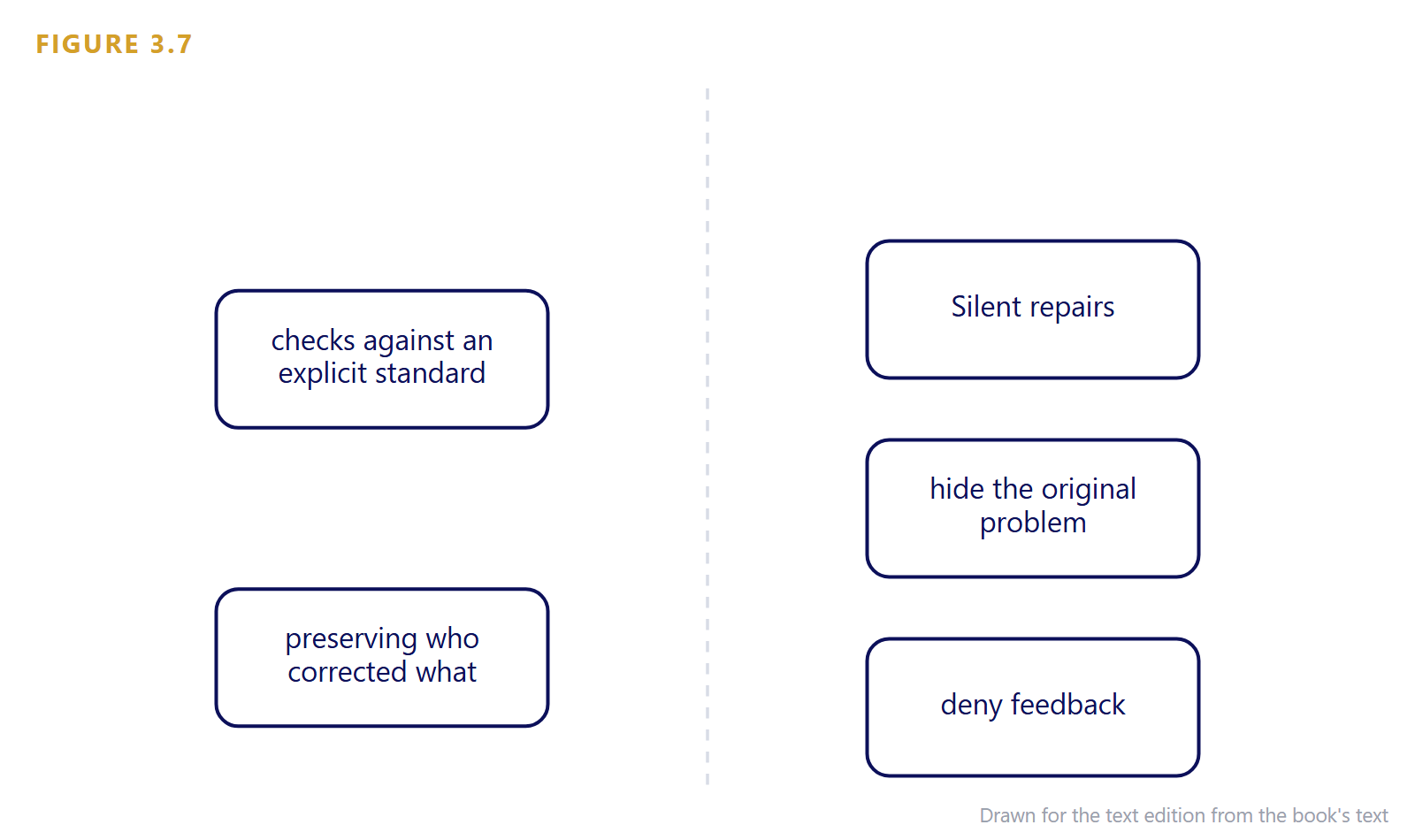
Figure 3.7 Quality review checks observable work. Original conceptual illustration; arrows organise the discussion and do not establish a validated causal effect or a scoring procedure.
Original exercise L3 E07
Basis - original fictional exercise. The organisation, events and any numbers are invented for learning. No HCDI result is assigned.
An Indexer uploads a correctly dated document against the wrong indicator. A colleague proposes moving it and deleting the original.
| Analytical task | Learner response required |
| Observation | Identify what the stated record directly establishes. |
| Inference | State the interpretation that still needs support. |
| Alternative | Identify a plausible alternative or missing context. |
| Authority | Identify the relevant credential or role boundary. |
Question - What does the source correction require?
Worked answer: Part G, exercise L3 E07.