
HCDI Certified Indexer
Chapter 6. Two-party evidence and need-to-know
Source note
Source basis - S2, physical PDF page 9.
HCDI platform rule (Unit 2.5); general professional knowledge. On a two-party engagement each item carries a party: one of the transaction type's parties, or Joint. A party-side reader sees their own party's items and joint items only, and an unattributed item is hidden from a party-side reader. Single-entity engagements have no party field. Behind the rule is a general principle: people should see only what they need in order to do their part. Attributing an item to the wrong party either hides evidence that a party should see, or shows one party the other's material. Both are errors with consequences.
Governance Boundary. If you are unsure which party an item belongs to, find out before you attribute it. A wrong attribution is a confidentiality problem.
Attribution controls visibility
Basis - general professional knowledge and editorial explanation. External references are identified explicitly; this section adds no HCDI rule.
Shared transaction relevance does not create shared disclosure permission. Need-to-know concerns purpose and authority rather than rank. Establish origin and intended visibility before attribution. Correct mistakes through authorised routes while preserving the record. A general example does not grant new disclosure rights.
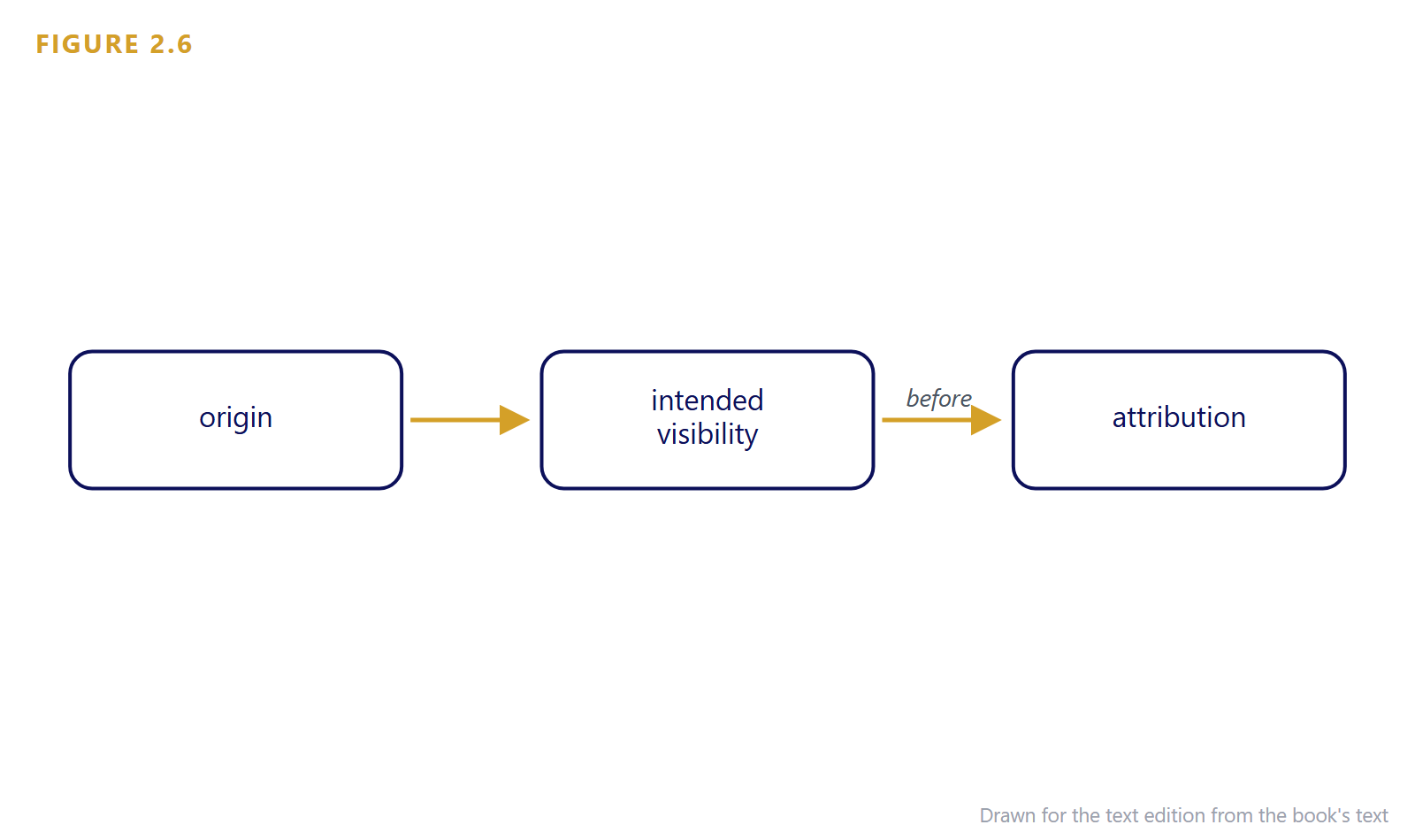
Figure 2.6 Attribution controls visibility. Original conceptual illustration; arrows organise the discussion and do not establish a validated causal effect or a scoring procedure.
Original exercise L2 E06
Basis - original fictional exercise. The organisation, events and any numbers are invented for learning. No HCDI result is assigned.
A target provides a sensitive customer schedule. The acquirer asks for Joint attribution because both organisations care about the acquisition.
| Analytical task | Learner response required |
| Observation | Identify what the stated record directly establishes. |
| Inference | State the interpretation that still needs support. |
| Alternative | Identify a plausible alternative or missing context. |
| Authority | Identify the relevant credential or role boundary. |
Question - Does shared interest establish shared visibility?
Worked answer: Part G, exercise L2 E06.