
HCDI Certified Indexer
Chapter 15. Recording a suspected integrity matter
Source note
Source basis - S2, physical PDF page 12.
HCDI platform rule (Unit 2.11). A suspected integrity matter is recorded with its category and a description. Recording and determining are two acts. A Deal Lead or Reviewer records a suspicion. Only HCDI Compliance determines whether an Integrity Event exists. For the suspending kinds, suspension starts at recording: nothing can be scored, submitted, finalized or issued until HCDI Compliance closes the event. Never choose a category to avoid a suspension. Name no more people than needed.
Governance Boundary. The suspicion is yours to record. The determination is not yours to make.
Suspicion has a different owner from determination
Basis - general professional knowledge and editorial explanation. External references are identified explicitly; this section adds no HCDI rule.
A useful suspicion record states observed conduct, source and timing without unnecessary personal detail. Motive may remain unknown. Choosing a category to avoid its consequences conceals the concern. The source suspension applies to suspending kinds; this book invents no category list.
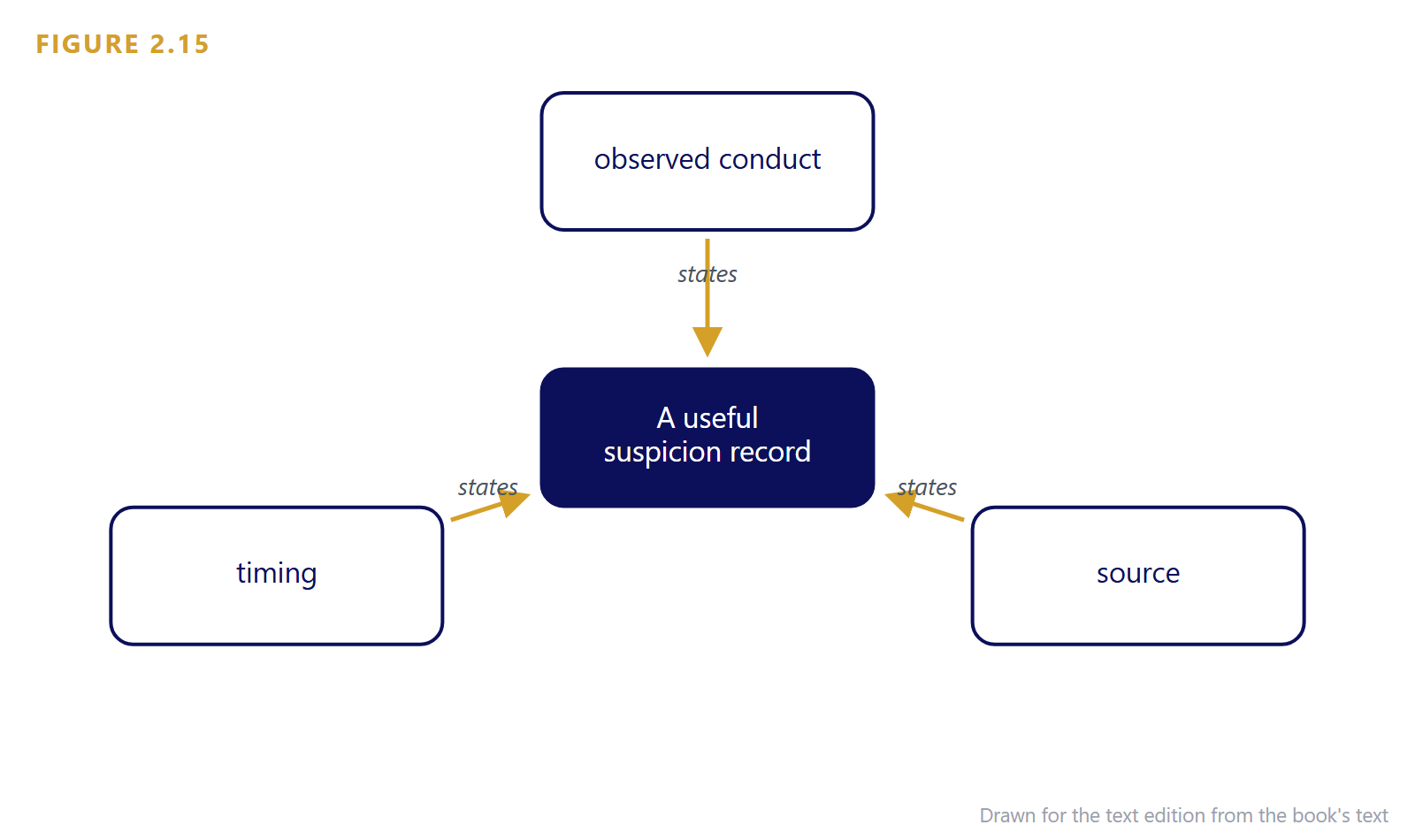
Figure 2.15 Suspicion has a different owner from determination. Original conceptual illustration; arrows organise the discussion and do not establish a validated causal effect or a scoring procedure.
Original exercise L2 E15
Basis - original fictional exercise. The organisation, events and any numbers are invented for learning. No HCDI result is assigned.
A client offers follow-on work if an observation is omitted. A colleague wants to call it routine feedback to avoid delay.
| Analytical task | Learner response required |
| Observation | Identify what the stated record directly establishes. |
| Inference | State the interpretation that still needs support. |
| Alternative | Identify a plausible alternative or missing context. |
| Authority | Identify the relevant credential or role boundary. |
Question - What is wrong with that relabelling?
Worked answer: Part G, exercise L2 E15.