
HCDI Certified Independent Reviewer
Chapter 7. Reviewing the whole assessment
Source note
Source basis - S4, physical PDF page 9.
HCDI platform rule (Unit 4.4). You read everything: overall result and coverage, how much is scored, how much is evidenced but unscored, and how much could not be evidenced. Not evidenced is never a low score and leaves every denominator. You read every party's actions, because the review is of the whole assessment. You read the recorded rationale and the action text, and you edit neither. You read the not-evidenced indicators and the action written for each. Draft reports are watermarked and are not issued reports. A corrective action carries a materiality, a response type, a timing, an accountable function, the implementation instrument, and approval in English and in Arabic with the equivalence check. The reviewer reads these in order to understand the action, and tests them against the methodology in a unit that is Methodology Protected (Unit 4.12).
Indexer Perspective. You are reading work that someone else did under pressure. Read it as they would want a stranger to read it: for what it says and not for what it is meant to say.
Whole-assessment reading prevents selective comfort
Basis - general professional knowledge and editorial explanation. External references are identified explicitly; this section adds no HCDI rule.
A convincing conclusion can draw attention away from gaps, parties or actions. Read what supports the conclusion and what limits it. Keep evidenced-but-unscored and not-evidenced matters distinct. The review is read-only; understanding a weakness does not authorise editing its rationale.
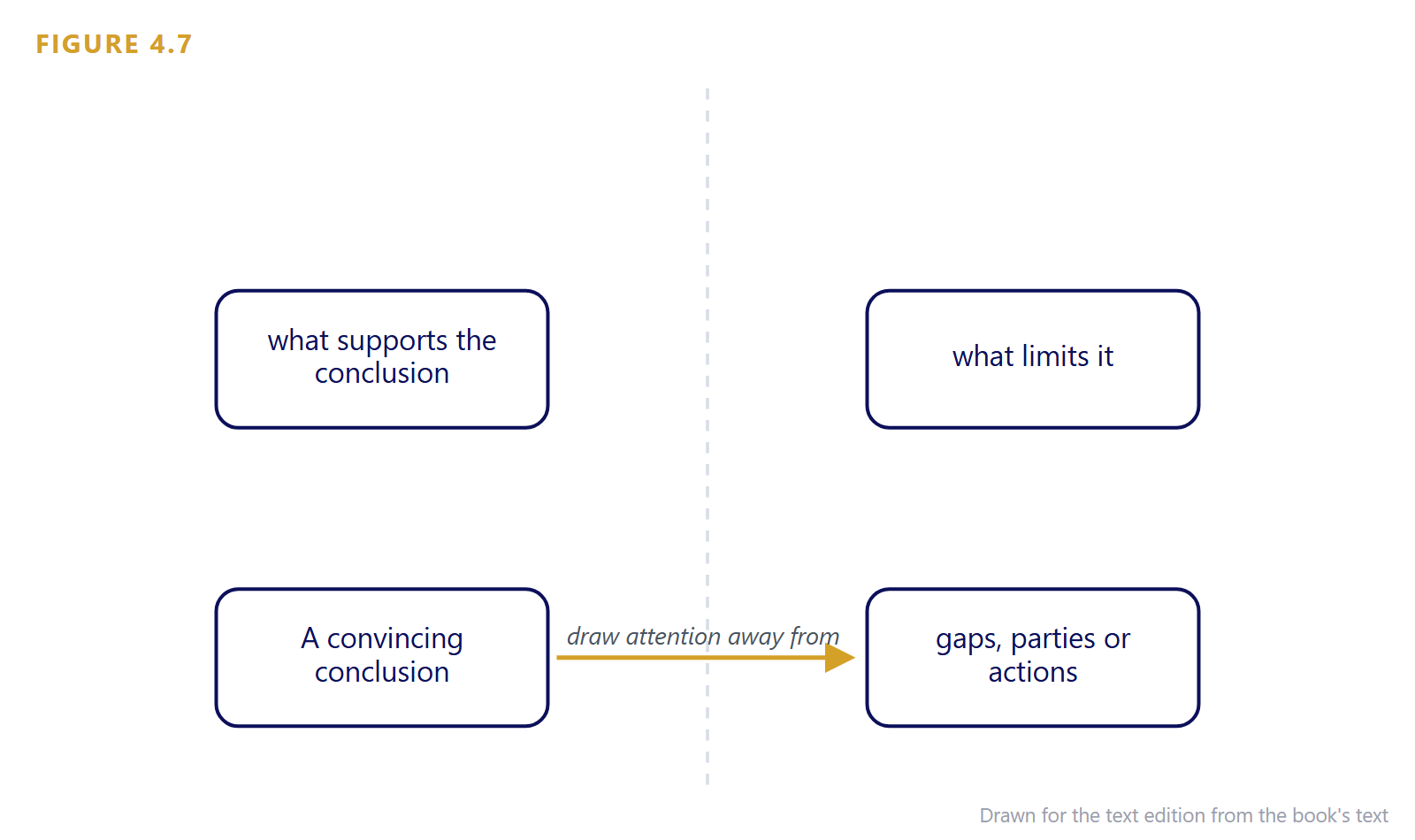
Figure 4.7 Whole-assessment reading prevents selective comfort. Original conceptual illustration; arrows organise the discussion and do not establish a validated causal effect or a scoring procedure.
Original exercise L4 E07
Basis - original fictional exercise. The organisation, events and any numbers are invented for learning. No HCDI result is assigned.
A covering note highlights strong findings and asks the reviewer to ignore unevidenced areas as administrative details.
| Analytical task | Learner response required |
| Observation | Identify what the stated record directly establishes. |
| Inference | State the interpretation that still needs support. |
| Alternative | Identify a plausible alternative or missing context. |
| Authority | Identify the relevant credential or role boundary. |
Question - What should be read?
Worked answer: Part G, exercise L4 E07.