
HCDI Certified Independent Reviewer
Chapter 11. Recording completion, and staleness
Source note
Source basis - S4, physical PDF page 10.
HCDI platform rule (Unit 4.6). Recording the review completion is the reviewer's one act. Record it last, after the actions are final, with a note of what you reviewed. A completion goes stale when a corrective action changes after it, when the assessment returns to draft, or when the assignment is revoked. Finalize refuses until it is recorded again. A stale review is a review of something that no longer exists. Re-recording it is a fresh judgement, not a formality. Common Error. Recording completion early "to be ready" and then re-recording it without re-reading what changed.
A changed record can make a review stale
Basis - general professional knowledge and editorial explanation. External references are identified explicitly; this section adds no HCDI rule.
A completion concerns the assessment actually reviewed. Later action changes, return to draft or assignment revocation affect that relationship. Re-recording is a fresh judgement, not a routine renewal. Compare the changed material and its consequences before acting. This is public staleness logic, not protected methodology testing.
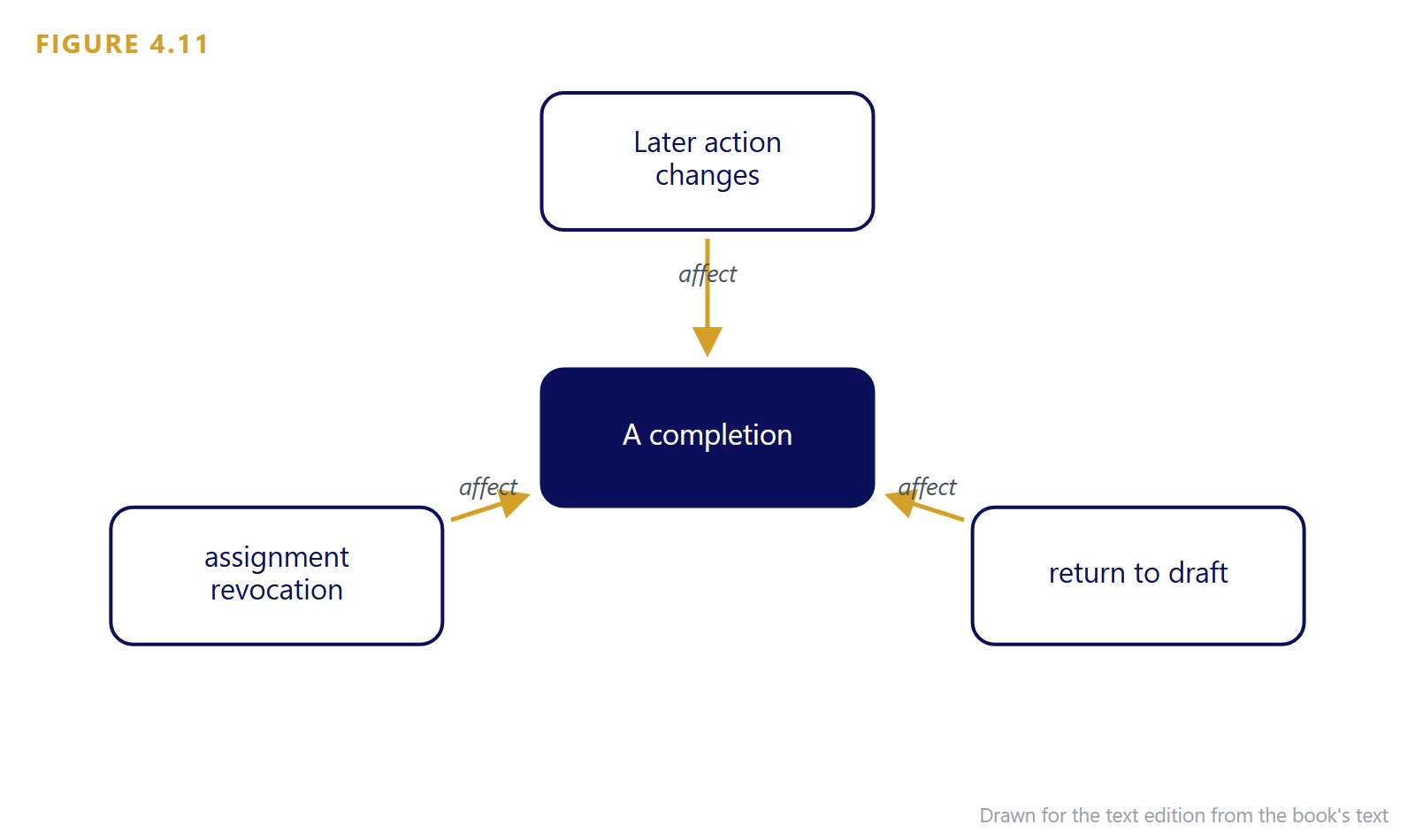
Figure 4.11 A changed record can make a review stale. Original conceptual illustration; arrows organise the discussion and do not establish a validated causal effect or a scoring procedure.
Original exercise L4 E11
Basis - original fictional exercise. The organisation, events and any numbers are invented for learning. No HCDI result is assigned.
A reviewer records completion. A corrective action is edited afterward; the team asks for an immediate repeat click.
| Analytical task | Learner response required |
| Observation | Identify what the stated record directly establishes. |
| Inference | State the interpretation that still needs support. |
| Alternative | Identify a plausible alternative or missing context. |
| Authority | Identify the relevant credential or role boundary. |
Question - What is required?
Worked answer: Part G, exercise L4 E11.