
HCDI Foundation Certificate
Chapter 4. Employee retention
Source note
Source basis - S1, physical PDF page 9.
external academic referenceexternal academic reference (Meyer & Allen, 1991); HCDI pillar P3, Employee Engagement & Retention. People stay in an organisation for different reasons. Meyer and Allen distinguished three kinds of commitment: wanting to stay because of an emotional tie, needing to stay because leaving would cost too much, and feeling obliged to stay (Meyer & Allen, 1991). Two people who both stay may be very different risks. The third pillar, Employee Engagement & Retention, concerns whether the people a transaction depends on are likely to remain engaged. HCDI reads evidence about an organisation. It does not predict what any individual will do, and a report never names the people who answered.
Governance Boundary. Respondents answer on the basis that they will not be identified. Do not ask the delivering team to say who said what.
Further reading. Meyer & Allen (1991).
Retention and engagement answer different questions
Basis - general professional knowledge and editorial explanation. External references are identified explicitly; this section adds no HCDI rule.
Remaining on payroll does not establish willingness or capacity to contribute. A person may stay while withdrawing effort or contribute strongly while preparing to leave. Meyer and Allen distinguish attachment, perceived costs of leaving and a sense of obligation. That interpretive framework helps explain why identical staying behaviour can have different meanings. It is not an individual resignation predictor or an HCDI instrument. [R4]
Define the population and exit event before calculating turnover. Voluntary departures, redundancies, transfers and contract expiries answer different questions. A starting-cohort measure follows the original members; a period rate may use average headcount. New joiners do not restore the original cohort. State the denominator and avoid comparing unlike measures.
Dependency matters alongside count. Losing one person who alone maintains a critical system may disrupt integration more than several exits from a function with genuine backup capability. Examine role dependencies and knowledge transfer without identifying respondents or inferring intentions from demographic characteristics.
A retention payment changes the economics of leaving but may not restore trust, manageable workload or professional identity. A lower exit count may also reflect seasonality or a weak labour market. Timing alone does not isolate an intervention's effect.
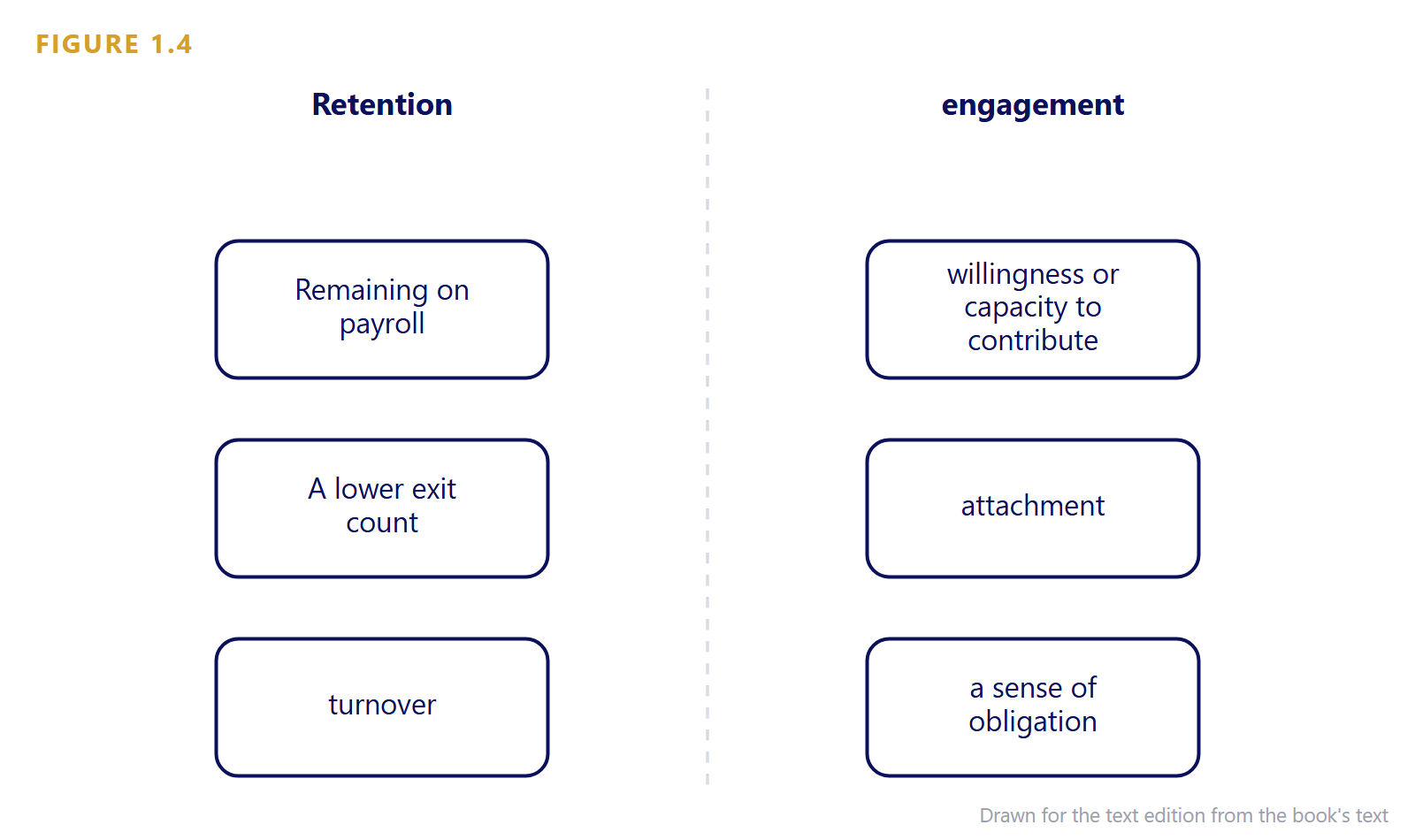
Figure 1.4 Retention and engagement answer different questions. Original conceptual illustration; arrows organise the discussion and do not establish a validated causal effect or a scoring procedure.
Original exercise L1 E04
Basis - original fictional exercise. The organisation, events and any numbers are invented for learning. No HCDI result is assigned.
Harbour Analytics starts a quarter with 120 employees. Nine original members leave voluntarily and six people join. Two leavers maintain a critical interface. A retention bonus begins halfway through the quarter.
| Analytical task | Learner response required |
| Observation | Identify what the stated record directly establishes. |
| Inference | State the interpretation that still needs support. |
| Alternative | Identify a plausible alternative or missing context. |
| Authority | Identify the relevant credential or role boundary. |
Question - Calculate original-cohort retention and assess a claim that the bonus solved retention.
Worked answer: Part G, exercise L1 E04.