
HCDI Foundation Certificate
Chapter 3. Communication during transformation
Source note
Source basis - S1, physical PDF page 9.
external academic referenceexternal academic reference (Kotter, 1995; Edmondson, 1999); HCDI pillar P2, Communication & Change Management. When people are not told what is happening, they fill the silence. Kotter observed that leaders often under-communicate the vision for change by a very large margin and let daily behaviour contradict it (Kotter, 1995). In a transaction the stakes are concrete: who stays, who reports to whom, what is being protected. The second pillar, Communication & Change Management, concerns how an organisation communicates and manages change. For a decision-user the practical question is simple: has the organisation shown, on evidence, that it can tell its people the truth in a way that they understand, and that it can handle the change it is about to ask of them? Communication also depends on whether people feel able to answer back. Edmondson defined team psychological safety as a shared belief that a team is safe for interpersonal risk-taking, and found it associated with learning behaviour in work teams (Edmondson, 1999). Where people do not feel safe to raise a concern or ask a question, a change programme loses the information it most needs. Common Error. Reading a well-written announcement as proof that communication works. An announcement is something said. Evidence of communication is whether people received, understood and acted on it.
Further reading. Kotter (1995); Edmondson (1999).
Communication needs a working feedback loop
Basis - general professional knowledge and editorial explanation. External references are identified explicitly; this section adds no HCDI rule.
Delivery, understanding and credibility are different conditions. A message may reach an inbox without being read, be read without being understood or be understood without being believed. Credibility also depends on what leaders subsequently do. Counting announcements leaves these links untested.
Transformation creates genuine uncertainty. Responsible communication distinguishes current facts, undecided matters and information that cannot yet be disclosed. A promise that no roles will change can damage trust if leaders do not control that outcome. A defensible message describes the decision process and a realistic next update rather than inventing reassurance.
Feedback reveals misunderstandings that a broadcast cannot. Consider language, shift patterns, digital access and the expected consequences of speaking. The existence of a channel does not prove that it is usable. Edmondson's 1999 study associated psychological safety with learning behaviour in 51 work teams in one manufacturing company. It does not establish that a particular communication programme causes acquisition success. [R2]
Trace a consequential issue through the chain: message, access, understanding, concern and response. Psychological safety concerns interpersonal risk; it is not a promise of permanent employment or freedom from accountability.
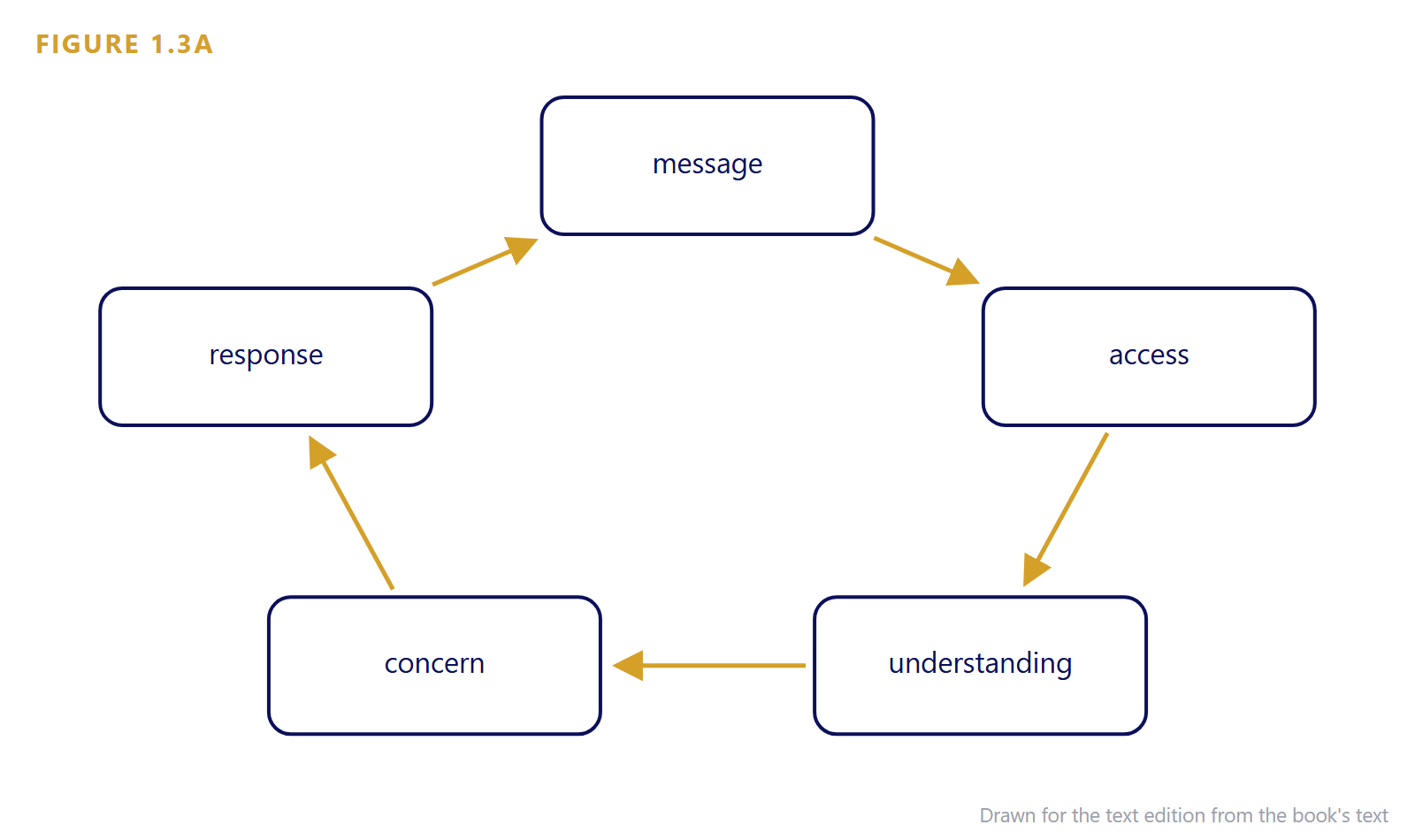
Figure 1.3A Communication needs a working feedback loop. Original conceptual illustration; arrows organise the discussion and do not establish a validated causal effect or a scoring procedure.
Original exercise L1 E03
Basis - original fictional exercise. The organisation, events and any numbers are invented for learning. No HCDI result is assigned.
Solstice Services emails 800 employees. Delivery logs show 760 inbox deliveries. A voluntary comprehension exercise receives 200 replies; 140 describe the next step accurately. Night-shift employees cannot attend the briefing.
| Analytical task | Learner response required |
| Observation | Identify what the stated record directly establishes. |
| Inference | State the interpretation that still needs support. |
| Alternative | Identify a plausible alternative or missing context. |
| Authority | Identify the relevant credential or role boundary. |
Question - Can management report that 70 percent of all employees understood?
Worked answer: Part G, exercise L1 E03.
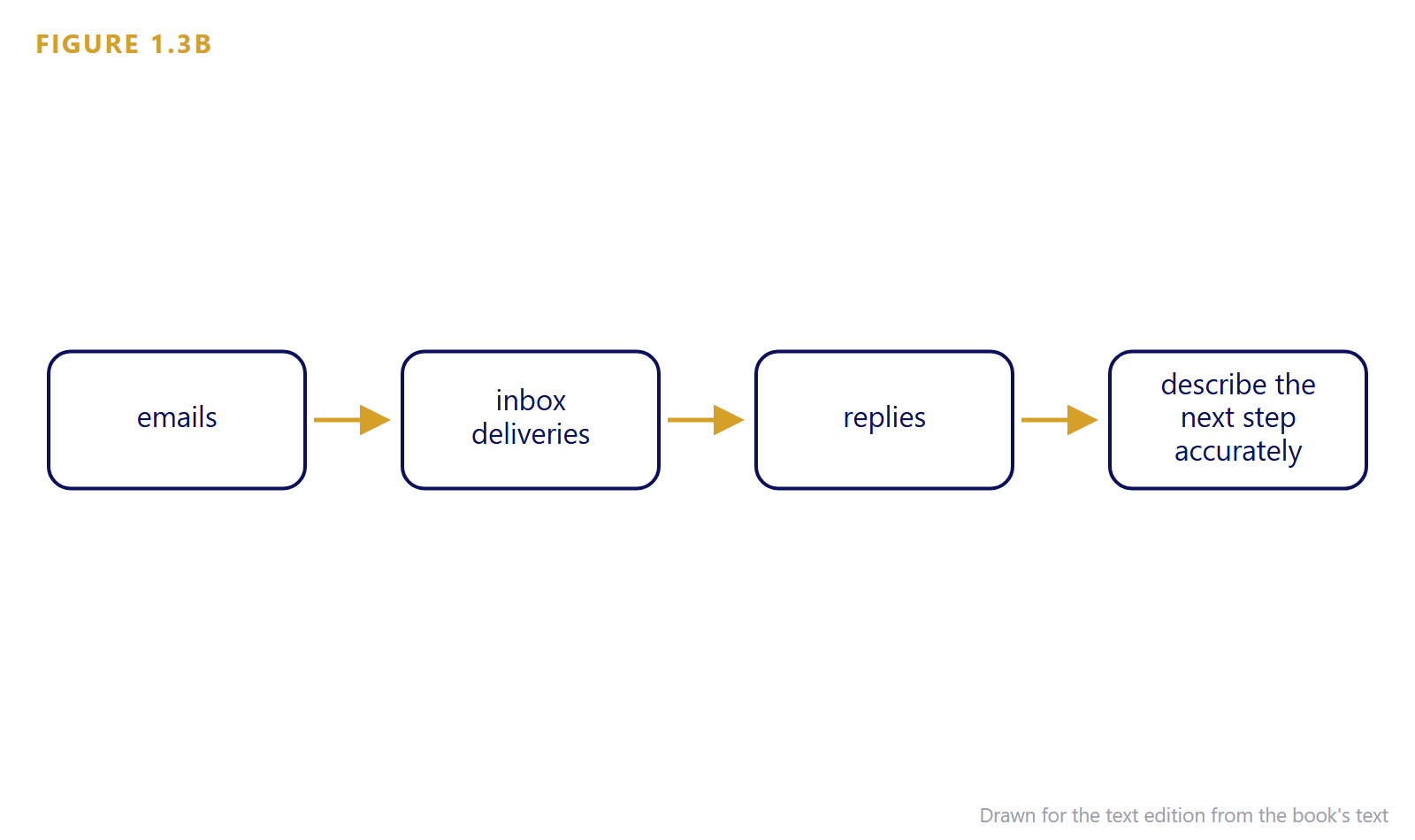
Figure 1.3B Communication denominators. Original chart of the Solstice fictional exercise. Inbox delivery, reply and accurate-reply counts measure different stages; this is not an HCDI indicator or empirical dataset.